| |
| |
Hello there. As investigators work to determine why a pilot allegedly attacked his captain and tried to seize control of a Flydubai flight to Tel Aviv on Wednesday, attention is turning to how it could have happened in the first place. TIME’s Jeffrey Kluger looks into how airlines deal with potential threats from their own staff. |
We also have a story on the next generation of weight-loss drugs heading for the market, which aim to avoid the side effects of the current offerings. |
|
|
IN TODAY’S BRIEF |
Tennessee’s botched execution Next generation weight loss Trump’s shadow docket victories Cockpit security The 0.1% Elephant bath
|
|
|
|
| |
|
|
|
| |
| |
READ THIS FIRST |
Tennessee reviews lethal injection process after botched execution |
 |
George Walker IV—AP |
|
Tennessee is reviewing its lethal injection process after a botched execution attempt left 50-year-old Christa Pike in critical condition. |
Pike was receiving “lifesaving care” at a Nashville hospital on Thursday, having survived two shots of the lethal drug pentobarbital, her attorneys said in a press conference. It is the first time in the modern era of the U.S. death penalty that a person received lethal injection drugs and survived, according to the nonpartisan Death Penalty Information Center. |
“This failed attempt is the worst we’ve ever seen and unlike any other botched execution in the modern era,” Robin Maher, the center’s director, said in a statement on Thursday. |
Pike’s case has drawn scrutiny over the state’s decision to proceed with her execution, despite repeated warnings about its lethal injection protocol from her attorneys, who said she was subjected to “chemical torture.” |
Gov. Bill Lee, a Republican, ordered an independent investigation of the lethal injection process late on Wednesday. Lee also suspended executions in the state till the end of the year, the second moratorium on executions during his time in office due to concerns over the state’s lethal injections. —Miranda Jeyaretnam |
Read the full story here. |
|
|
|
| |
|
|
|
| |
| |
SPONSORED |
REVERB |
|
|
Live concerts bring millions of fans together through music. Behind the scenes, REVERB channels that energy into environmental action.
See how REVERB has helped eliminate 4.6 million single-use bottles and is driving an entire industry to make sustainability part of every show.
Watch the episode |
|
|
|
| |
|
|
|
| |
| |
HAPPENING NOW |
The next generation of weight-loss drugs is almost here |
 |
Viktoriya Skorikova—Getty Images |
|
The field of weight-loss drugs is moving more quickly than ever since medications that mimic GLP-1, a type of peptide hormone in the gut, hit the market to treat weight issues and diabetes. But while there has been huge interest in the drugs, their side effects—which predominantly affect the GI system—cause roughly 40% of people who start them to stop taking them within a year. |
At the annual meeting of the European Association for the Study of Diabetes (EASD) in Milan, researchers from the pharmaceutical companies behind the most popular weight-loss medications reported encouraging results from studies of a new group of injectable medications that may come with fewer side effects. |
Amylins are a group of peptide hormones that work in similar ways to GLP-1s by curbing appetite signals in the brain and encouraging the stomach to empty. They target different receptors on cells, so their effect can be complementary to that of GLP-1s and other drugs in their hormone group (called incretins). But unlike incretins, amylins don’t seem to cause as many severe side effects such as nausea, vomiting, and stomach cramping. —Alice Park |
Read the full story here. |
|
|
|
| |
|
|
|
| |
| |
THE CONTEXT |
Trump is using the shadow docket to advance his agenda |
 |
Kent Nishimura—AFP/Getty Images |
|
While President Donald Trump battles growing pushback from lawmakers and American voters on multiple fronts, he is continuing to score victories in another arena: the Supreme Court’s so-called “shadow docket.” |
On Tuesday, the Court issued an emergency order allowing Trump to resume deporting people to “third countries” other than their own, temporarily lifting a lower court’s block. |
Days earlier, in response to another emergency request from the Trump Administration, the Court permitted the use of a controversial Department of Homeland Security (DHS) database in verifying the eligibility of voters ahead of the November midterms amid the Trump Administration's aggressive effort to crack down on alleged noncitizen voting. |
In both cases, the orders were unsigned and gave no vote count, but the Court’s three liberal Justices publicly dissented. |
The rulings are only the latest in a string of mostly favorable decisions the Trump Administration has received from the Supreme Court in response to a flurry of requests for emergency relief it has made as it fights to implement the President’s second term agenda amid an array of legal challenges. —Connor Greene |
Read the full story here. |
|
|
|
| |
|
|
|
| |
| |
SPONSORED |
SEABOUND |
|
|
Nearly 90% of the world’s goods travel by ship. From the food on our shelves to the packages at our doors, shipping touches nearly every part of our lives, and so does its carbon footprint.
Seabound is betting on an unexpected solution: a box of rocks. By turning limestone into a sponge that captures CO₂ emissions, the company is proving that small innovations can help change the course of global shipping.
Watch the episode |
|
|
|
| |
|
|
|
| |
| |
IN FOCUS |
What the Flydubai incident reveals about when a pilot becomes the threat |
 |
Giuseppe Cacace—Getty Images |
|
The facts about what happened aboard Flydubai flight 1073, from Dubai, UAE to Tel Aviv, Israel on Sept. 30 are not in dispute. |
What’s far less clear in the wake of the near mass casualty is how it happened in the first place. The attacker had been with the airline for eight months—coming aboard before the war in Iran began. Was he nonetheless collaborating with Iran, or was he a self-radicalized lone wolf? What kind of screening do commercial pilots worldwide go through to ensure mental stability and to rule out terrorist or criminal links? How did a weapon make it aboard the plane in the first place? And are the locked and hardened cockpit doors—which went into use on airlines worldwide after 9/11—almost too secure, keeping attackers out, yes, but preventing rescuers from getting in to stop a similar incident between pilots? |
The early reports that the weapon used in the attack was a knife raised questions, since the popular belief is that pilots and crew go through the same security screening passengers do. But that’s not the case, according to experts. |
“Most of the pilots and flight crew will go through what's called the ‘crew member access point,’” says Jeff Price, professor of aviation at the Metropolitan State University of Denver, and author of the book Practical Aviation Security. “They’re called ‘known crew members.’ A large part of this is based on trust. They have access to the airplane and if they wanted to sabotage it, they probably could.” |
Other kinds of screening—for mental health, criminal background, and potential association with terrorist or other criminal organizations—are more rigorous, but standards vary from country to country. “A new pilot does go through a criminal history record check to see if they've ever been arrested or convicted of a set of 28 different crimes,” says Price of the U.S. process. “They also go through what's called a security threat assessment, which is a TSA check to see if they are on any sort of list that might require them to not receive a badge to the airline, which means they can't fly for the airline.” |
Psychological profiling is much less strict, basically operating on the honor system—honor being a quality that somebody with an eye toward bringing down a plane would not be likely to possess in abundance. “There's not a federal requirement for that other than their flight medical [tests], in which case they're given a questionnaire that basically says, ‘Are you mentally stable and do feel okay?’” says Price. —Jeffrey Kluger |
Read the full story here. |
|
|
|
| |
|
|
|
| |
| |
ONE NUMBER |
$28 trillion |
The top 0.1% wealthiest Americans have seen their wealth double since the end of 2019, according to new figures from the Federal Reserve. They now hold 15% of the nation’s wealth, or $28 trillion. |
SOURCE: WALL STREET JOURNAL |
|
|
|
| |
|
|
|
| |
| |
A VIRAL MOMENT |
Elephant splash |
A moment of quiet from the Kibwezi Forest in Kenya as a family of elephants stay cool in a drought. |
|
|
|
|
|
| |
|
|
|
| |
| |
SPONSORED |
AMINI |
|
|
Across the Global South, Amini is working to ensure nations are not left out of their digital future. From climate intelligence to sovereign AI, Amini is building the infrastructure countries need to own their data, strengthen public services and create economic opportunity on their own terms.
Watch the episode |
|
|
|
| |
|
|
|
|
| |
 |
| Linked |
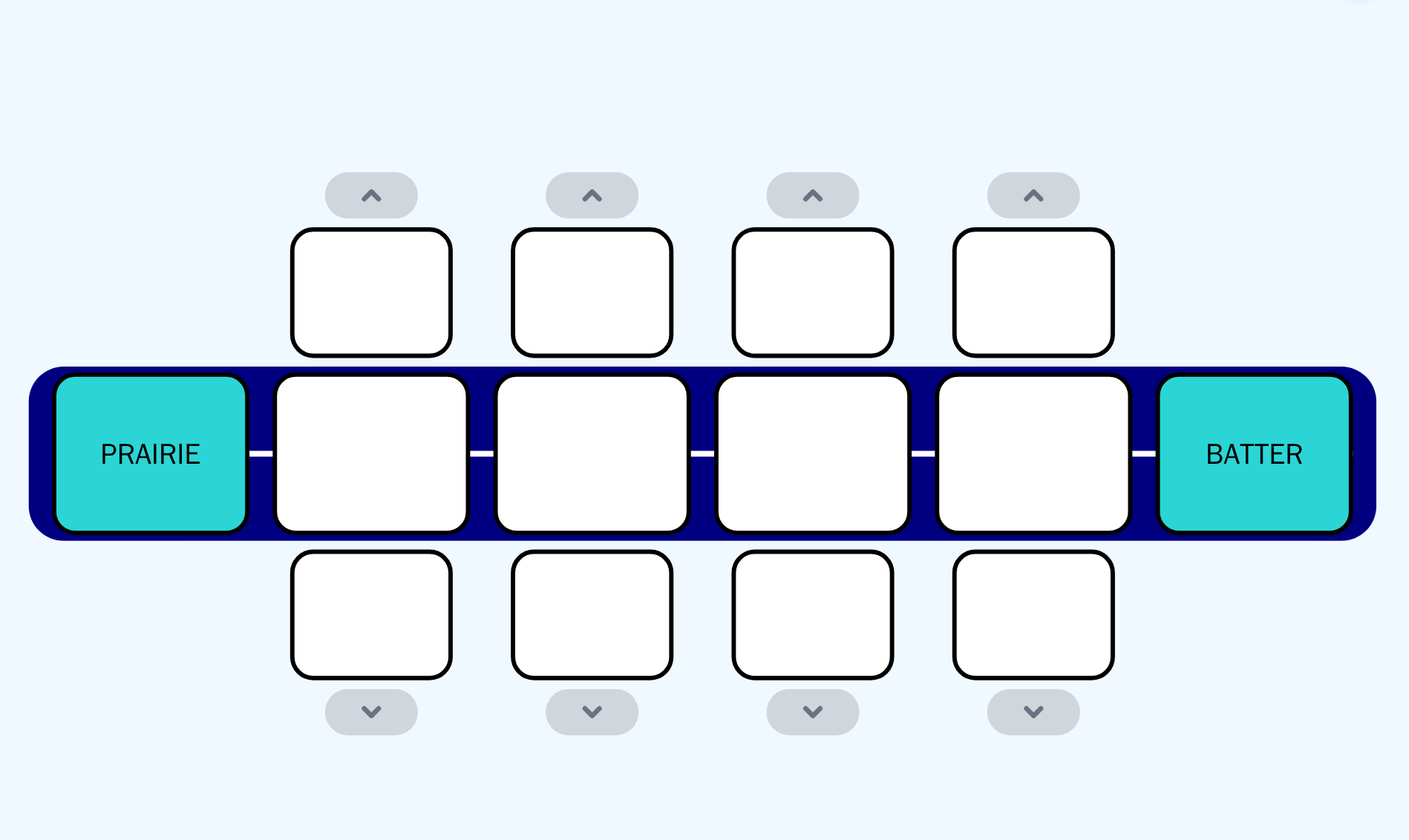
| In this addictive word-association game, find the steps that will unite two seemingly unrelated words in just four moves. |
 |
| PLAY NOW |
|
|
| |
|
|
|
|
|
|
|
| |

Click to sign up.
|
|
|
|
|
|





Comentarios
Publicar un comentario