Hello there. I hope you all had a great weekend, wherever you are in the world. For The Brief today, I spoke to a water security expert about the potentially catastrophic targeting of water desalination plants in Iran and Kuwait. We also have coverage of the World Cup final and much more. |
|
|
| |
Five Must-Reads |
|
|
|
|
|
|
|
|
The World Cup's First Halftime Show Did Too Much and Meant Too Little
When in Rome, do as the Romans do. And so at this World Cup final in New Jersey on Sunday, spectators of the world’s most popular sport were treated to a distinctly American tradition: the half-time show. TIME’s Judy Berman found the event “overstuffed” with superstars, but “impossible to follow.” —TIME |
|
|
|
|
|
| |
|
|
|
|
|
|
|
|
|
|
| |
IN FOCUS |
Water becomes a target in the Iran War |
Before an interim agreement was reached between Tehran and the United States to bring an end to the war a month ago, President Donald Trump repeatedly threatened to attack Iran’s infrastructure as a means of exacting concessions. On one occasion, in April, he warned that a "whole civilization will die tonight" if his demands weren’t met. |
Now that the agreement has all but fallen apart, those strikes on infrastructure appear to have begun. |
Iranian state media reported that U.S. airstrikes had hit an electricity and water desalination plant in Hormozgan Province on Friday, in addition to strikes on highways, bridges, and tunnels. |
The strike at the desalination plant in Bonji village on the Iranian coast disrupted water supply to some 10,000 people, the semiofficial Tasnim news agency reported. |
“As a result of the attack, the supply of drinking water to several villages in western Jask County has been disrupted,” the Iranian Embassy in India said in a post on X, describing the attack as a war crime. |
 |
The Ras al-Khair water desalination plant, in Saudi Arabia, on March 30, 2023. FAYEZ NURELDINE WENIG/AFP via GETTY IMAGES |
|
Following the attack, U.S. ally Kuwait reported its own desalination facilities had been hit repeatedly on Friday and Saturday. |
It is not the first time such facilities have been hit. But as Iranian regime officials have repeatedly warned in recent days that Iran would attack “regional infrastructure” in response to any U.S. attacks on its own critical infrastructure, the attacks on water facilities highlight a potentially dangerous new phase of the war. Deliberate attacks on water supplies would violate the Geneva Conventions and likely represent a war crime; they could also threaten the water supply for millions. |
Both Iran and America’s Gulf allies rely on desalination plants to provide drinking water for their populations in the unforgiving Middle East, one of the most arid regions on Earth. |
Kuwait depends on desalination for about 90% of its drinking water. Qatar uses desalination for 99%, Bahrain and Saudi Arabia for around 90%. |
Because most of these desalination plants are large complexes concentrated along the coast, they are particularly vulnerable to Iranian attacks. |
David Michel, senior associate for water security at the Center for Strategic and International Studies (CSIS), tells TIME the ramifications of full-scale tit-for-tat strikes on water desalination facilities “could be substantial, wreaking considerable disruptions on the regional economies and risking significant escalation of the ongoing conflict.” |
Michel wrote in March that such an eventuality could threaten water supplies for millions of people. |
He adds that beyond the immediate danger of reduced access to water, strikes against desalination facilities in the Gulf could pose a broader threat to the region’s economic model. |
“The GCC countries risk appearing a less safe and stable place to invest and conduct business if their vital water supplies could be interrupted at any moment,” he says. |
The Gulf's reliance on these plants also provides an asymmetric strategic advantage, which Iran may be able to leverage, just as it has done with the closure of the Strait of Hormuz. |
The new threat over water comes as the U.S. intensifies strikes on Iran in response to the killing of two American service members at a base in Jordan by Iranian missiles. |
Iran’s Health Ministry said Sunday that five women and two people under the age of 18 were among more than 50 people who have been killed in U.S. strikes in the past three weeks. |
|
| |
|
|
|
| |
ONE NUMBER |
$264.1 million |
Christopher Nolan’s adaptation of The Odyssey has brought in $264.1 million in global ticket sales, Universal Pictures said on Sunday. Some $124 million of that came from the U.S. and Canada. |
Those figures represent the biggest global opening of Nolan’s career. |
You can read TIME film critic Stephanie Zacharek’s review here. |
SOURCE: UNIVERSAL PICTURES |
|
| |
|
|
|
|
|
| |
A VIRAL MOMENT |
‘Jimothy’ the Raccoon |
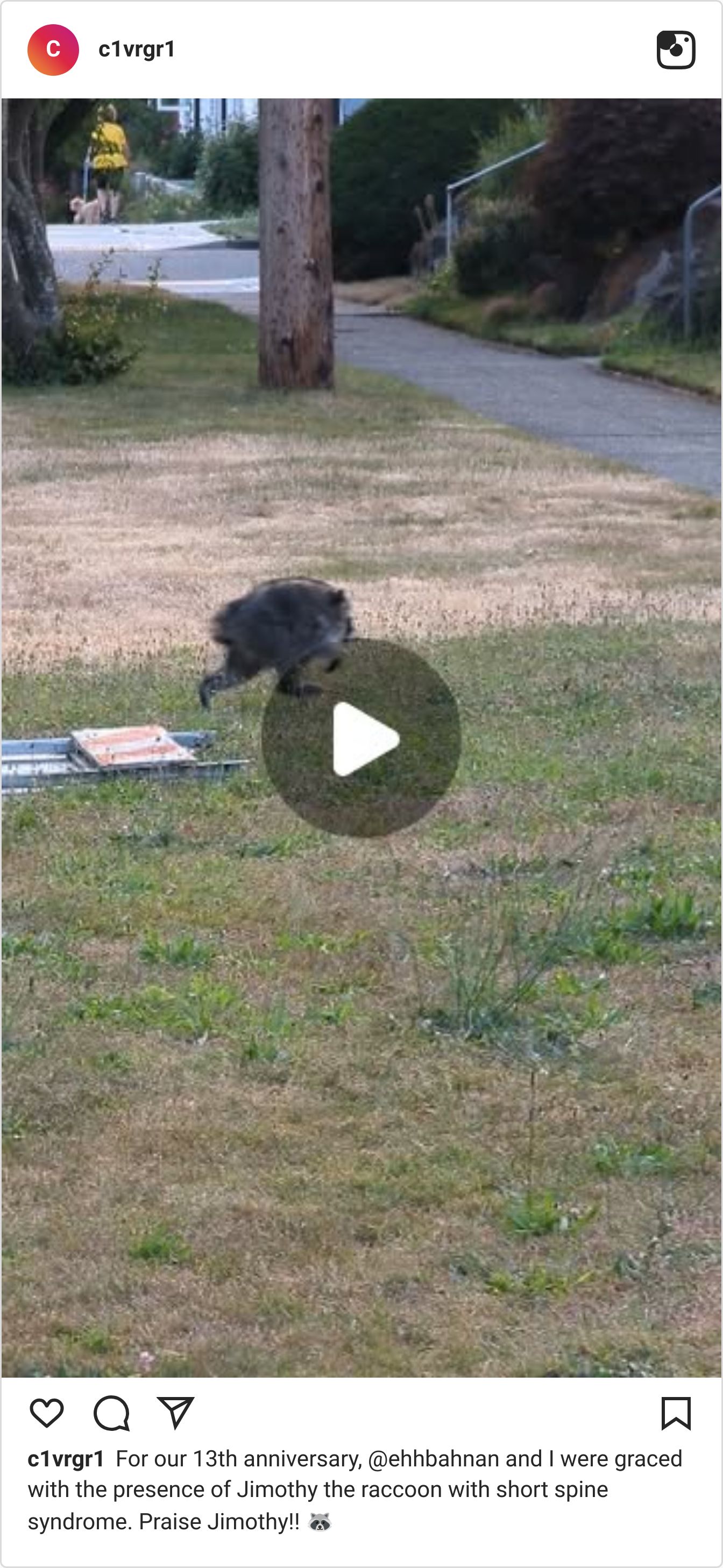
A raccoon with short spine syndrome has become an overnight sensation. His name is Jimothy. |
A video posted last week of Jimothy scurrying through a yard in Seattle only lasts for a few seconds, but it was enough to capture the hearts of people around the world. |
“[H]e moves with a sort of otherworldlyness, an ethereal aura,” wrote one person on X. |
Complete strangers were already offering up their lives to protect Jimothy when a local resident shared a video of him when he was just a baby. |
How Seattle kept Jimothy a secret until now is a mystery. |
|
|
|
| |
|
|
|
| |
 |
| Linked |
| In this addictive word-association game, find the steps that will unite two seemingly unrelated words in just four moves. |
 |
| PLAY NOW |
|
|
|
|
|
|
|
|
|
|
| |

Click to sign up.
|
|
|
| |
|
|
|




Comentarios
Publicar un comentario