| |
| |
|
Hello there. New York City Mayor Zohran Mamdani surprised many of his supporters when he turned up at the Oval Office to meet President Donald Trump earlier this year. The democratic socialist mayor justified the meeting with a man he had called a fascist by pointing to progress in talks on housing and immigration. Now, some Democrats may be looking to make a similar accommodation with Trump in order to pass legislation in the next two years. My colleague Nik Popli explains below what that might look like.
|
|
And after the news that AI may have helped solve one of mathematics’ oldest and most intractable problems, I spoke with American mathematician Brian Conrey, who has spent 45 years trying to solve the Riemann hypothesis, about what it means—and how he felt.
|
|
|
IN TODAY’S BRIEF
|
|
|
|
|
|
| |
|
|
|
| |
| |
COP FAILURE
|
Why the world’s climate talks broke down
|
 |
|
Khalil Hamra—AP
|
|
|
COP31, the United Nations’ annual climate change summit, ended on Sunday without consensus on an overarching climate deal after about two days of overtime in Antalya, Türkiye.
|
|
The annual conference brings together delegates to shape and formalize an approach to combating the effects of global warming. This year, the main dispute was whether the agreement should explicitly call for a transition away from fossil fuels.
|
|
That commitment traces back to the Paris Agreement, a 2015 climate treaty that calls for efforts to limit global warming to 1.5°C (2.7°F) above preindustrial levels.
|
|
Among the countries that opposed language calling for a transition away from fossil fuels were Russia and Saudi Arabia, while the European Union, the United Kingdom, and others refused to agree to any deals that did not acknowledge the leading cause of climate change.
|
|
The context:
|
-
The world is on track to imminently exceed 1.5°C of warming, says Lavanya Rajamani, a professor of international environmental law at the University of Oxford who helped draft the Paris Agreement, just as governments are showing a “rapidly dwindling appetite” for difficult and potentially costly action. —T. Michelle Murphy
|
|
Read the full story here.
|
|
|
|
| |
|
|
|
| |
| |
SPONSORED BY AUDEMARS PIGUET
|
The art of time, with Code 11.59 by Audemars Piguet
|
|
|
|
From the intricacy of openworking and the character of chiming watches to the subtle beauty of obsidian stone dials, the latest Code 11.59 by Audemars Piguet creations are a celebration of savoir-faire.
|
|
DISCOVER
|
|
|
|
| |
|
|
|
| |
| |
OUTBREAK SPREADS
|
Ebola’s death toll tops 5,700. Can the outbreak be contained?
|
 |
|
Tony Karumba—AFP/Getty Images
|
|
|
The Ebola outbreak that originated in the Democratic Republic of the Congo (DRC) has surpassed 11,700 confirmed cases and 5,700 deaths as of Nov. 19, making it the largest and deadliest Ebola outbreak in the country’s history and the second-deadliest worldwide.
|
|
Katie Thomas-Canfield, who is based in Bunia, DRC, and serves as the Ebola response director for the International Rescue Committee, tells TIME that this outbreak’s deadly pace was driven by numerous converging factors.
|
|
“There’s some element of it that is a perfect storm, and there’s some very specific elements of this moment in time that have contributed to the fast evolution,” Thomas-Canfield says.
|
|
Why the outbreak spread:
|
-
One of the main reasons this outbreak has spread so quickly and resisted containment is late detection, according to Dr. Abdou Sebushishe, a senior health adviser with the nonprofit International Medical Corps. There was a large gap between when the outbreak started and when it was discovered, he says.
-
According to the U.S. Centers for Disease Control and Prevention, it’s estimated that the outbreak began in mid- to late-February, two to three months before the outbreak was detected and declared an emergency by the World Health Organization in mid-May. —Rebecca Schneid
|
|
Read the full story here.
|
|
|
|
| |
|
|
|
| |
| |
DEALS WITH DEMS
|
Trump praises Jeffries and Schumer, sees room for deals with Democrats in 2027
|
 |
|
Tom Williams—CQ Roll Call/AP
|
|
|
President Donald Trump on Friday offered unusually warm praise for the top two Democrats in Congress and suggested that the incoming Democratic majority may prove easier to negotiate with than Republicans.
|
|
Speaking to reporters in the briefing room, Trump described Hakeem Jeffries, who is poised to become the first Black Speaker of the House, as “streetwise” and “smart.” He also praised the current Senate Democratic leader, Chuck Schumer. It’s a striking change in tone toward two lawmakers with whom he has repeatedly clashed. Trump also said prominent Democrats had already reached out to him privately about making potential deals next year on health care and immigration.
|
|
The context:
|
-
The comments offered one of the clearest indications yet of how Trump intends to navigate a dramatically altered political landscape following the midterm elections, which delivered Democrats control of both chambers of Congress.
-
Trump appeared eager to present himself as a potential negotiating partner, even as he emphasized that he would use his veto power to block legislation he opposed. “If they want to get things done, I want to get things done too,” Trump said. “There is a real possibility that we get a lot of great things done, especially on health care.” —Nik Popli
|
|
Read the full story here.
|
|
|
|
| |
|
|
|
| |
| |
RIEMANN RIDDLE
|
A mathematician spent 45 years trying to solve a problem. Now he reckons with an AI proof
|
 |
|
Robert Michael—picture-alliance/dpa/AP
|
|
|
In March, Brian Conrey, an American mathematician and founding executive director of the American Institute of Mathematics, made a $1,000 bet with a colleague. He wagered that a problem that had defeated mathematicians for more than 160 years, that he had worked on for the last 45 years, and that is often described as the world’s most famous math problem, would not be solved by artificial intelligence within a year. He has now lost that bet.
|
|
Levent Alpöge, a mathematician at Anthropic, claimed on Friday that he had proven the Riemann hypothesis with the help of Claude. The discovery shocked the world of mathematics—perhaps no one more than Professor Conrey, a leading expert on the Riemann problem.
|
|
When TIME spoke to Conrey on Sunday, he was still coming to terms with what the discovery might mean for his field—and his life’s work.
|
|
“It is shocking,” he says. “I’ve been working on this problem literally for … 45 years.”
|
|
“I always said to myself that there would be a timeline in human history that separates before we knew the proof of [the Riemann] hypothesis and after, and now all of a sudden we crossed that line,” he adds.
|
|
The hypothesis was first proposed by German mathematician Bernhard Riemann in 1859, and it concerns the distribution of prime numbers.
|
|
Alpöge claims he found a solution by adapting a proof of a simpler version of the problem, and Claude supplied the technical breakthroughs that completed it.
|
|
While some mathematicians say it will take time to fully confirm the problem has been solved, Conrey is convinced. If the proof holds, it would represent a major milestone in the use of AI to solve some of the world’s most complex scientific and mathematical problems.
|
|
After trying to solve the problem himself for decades, Conrey now sees that humans were outmatched.
|
|
“As a mathematician, you get some ideas, and you try different paths, and there might be lots of possible ways to get to the solution. But the combinatorics of it, it just grows, you know, exponentially,” he says.
|
|
“Even if you have 50 graduate students working with you and trying everything, that’s not enough. There might be thousands or millions of different ways into the solution, and as humans, we just can’t do all of them, and the machines can.”
|
|
Like many in his field, he is now reckoning with what the discovery means for mathematics.
|
|
“I have mixed thoughts or mixed feelings about it because I would have liked to solve it, or have a collaboration that did it. But I don’t think we were that close,” he says. “I think we’re all trying to wrap our heads around it.”
|
|
Conrey is finding some comfort in the margins of the discovery, however. He says there is no indication yet that AI can come up with its own math problems or direct the path of mathematics.
|
|
“That’s still a very human thing. I mean, that may all change. Who knows the way things are going.”
|
|
He is also reluctant to hand this achievement fully over to AI. “Humans didn’t solve it, but we built the machines to solve it,” he says. “That’s something.” —Richard Hall
|
|
|
|
| |
|
|
|
| |
| |
ONE NUMBER
|
|
1.47 degrees
|
|
The global average surface temperature for January–September 2026 was about 1.47°C above the pre-industrial average, according to a report this month from the World Meteorological Organization. The figure is dangerously close to the Paris Agreement's goal of limiting long-term warming to 1.5°C.
|
SOURCE: WORLD METEOROLOGICAL ORGANIZATION
|
|
|
|
| |
|
|
|
| |
| |
A VIRAL MOMENT
|
Carney the comedian
|
|
Canadian Prime Minister Mark Carney mocked President Donald Trump’s revamp of the Oval Office during a speech at the annual parliamentary press gallery dinner in Ottawa. Carney jokingly called the President an “interior decorator.”
|
|
|
|
|
|
| |
|
|
|
| |
 |
| Linked |
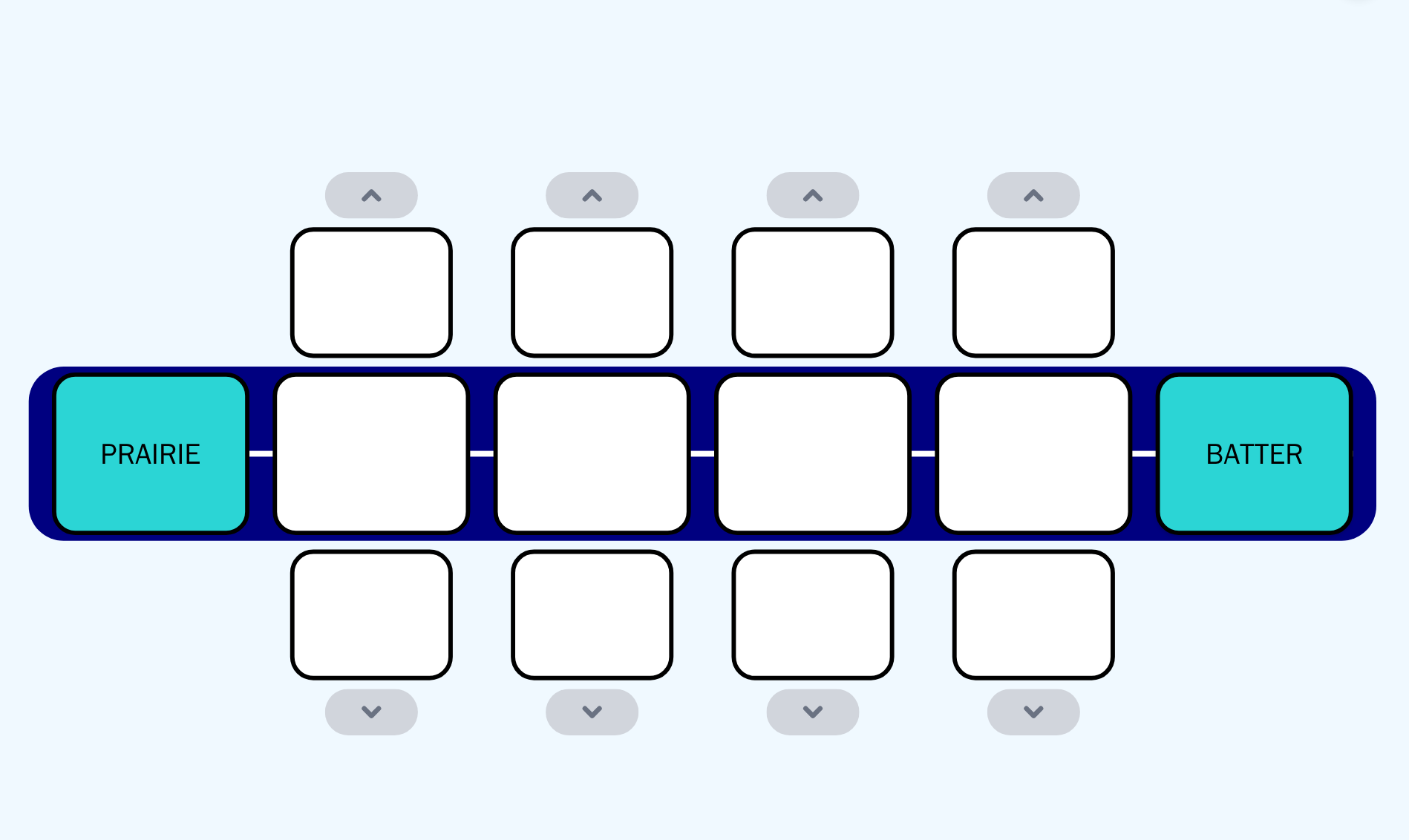
| In this addictive word-association game, find the steps that will unite two seemingly unrelated words in just four moves. |
 |
| PLAY NOW |
|
|
| |
|
|
|
|
|
|
|
| |

Click to sign up.
|
|
|
|
|
|





Comentarios
Publicar un comentario