| |
| |
|
Hello. If you didn’t quite reach your reading goals this year, you’re not alone: A 2025 NPR/Ipsos survey showed that only about 64% of American adults who’d set an annual reading goal met or exceeded it. Personally, I’m just pleased to have done better this year than last.
|
|
The good news is that you still have so many fantastic reads to look forward to—including those in TIME’s roundup of the 100 best books of 2026. Lucy Feldman, TIME’s books editor, has picked five titles below to get you started.
|
|
We also have a note from our Sam Jacobs, TIME’s Editor in Chief, on how we chose the list.
|
|
|
IN TODAY’S BRIEF
|
-
An inside look at making the list
-
How it feels to write a best-seller
-
Picks from TIME’s books editor
|
|
|
|
| |
|
|
|
| |
| |
INSIDE TIME
|
How we chose the 100 must-read books of 2026
|
 |
|
Illustration by TIME
|
|
|
We have a thing for lists here at TIME. Maybe you have noticed? While imperfect and limiting, lists are, to my mind at least, an unequaled way to make sense of the world and to start an argument about what and who matters.
|
|
We’re proud that TIME’s 100 Must-Read Books, now in its eighth year, has become one of the publishing industry’s most anticipated recognitions. Built through year-round reading, research, reporting, and debate, the project reflects the taste and rigor of our journalists.
|
|
Together, our staff has created something with the range of a good bookstore: novels and short stories, mysteries and thrillers, literary fiction, awards contenders and commercial blockbusters, alongside reported nonfiction, memoirs and biographies, histories, and poetry. For the book world, inclusion is a mark of distinction, and for readers, the list is meant to be a resource—a trusted guide to what deserves your attention.
|
|
“The end of reading” has been a topic of some reporting this year. Here, happily, are 100 reasons to start. —Sam Jacobs, TIME’s Editor in Chief
|
|
Read the full list here.
|
|
|
|
| |
|
|
|
| |
| |
SPONSORED BY AUDEMARS PIGUET
|
The art of time, with Code 11.59 by Audemars Piguet
|
|
|
|
From the intricacy of openworking and the character of chiming watches to the subtle beauty of obsidian stone dials, the latest Code 11.59 by Audemars Piguet creations are a celebration of savoir-faire.
|
|
DISCOVER
|
|
|
|
| |
|
|
|
| |
| |
WORTH YOUR TIME
|
Yesteryear became a cultural sensation, and its author is still reeling
|
 |
|
Tonje Thilesen for TIME
|
|
|
The impact of Yesteryear, published in April, cannot be overstated. The novel has sold 3.5 million copies around the world. Even before you crack the spine, it offers the tightest, most delicious elevator pitch for a literary novel in recent memory: a tradwife influencer wakes up in 1855 and is forced to actually live the lifestyle she’s been selling online.
|
|
Caro Claire Burke, the woman who wrote the most divisive mother character in fiction this year, is now in the throes of new motherhood herself, still recovering physically and already deeply in love with her child. But her experience has been nothing like that of Natalie Heller Mills, the protagonist of her best-seller, who enters this phase of life entirely unprepared and furious at a world determined to keep her contained.
|
|
For Burke, this change is only one of the universe-shifting transitions she’s experienced recently. When she sold her novel two years ago to Knopf—in a seven-figure deal, which is rare for a debut—her financial reality transformed completely. She paid off her car loan, bought a house in coastal Massachusetts, and became someone who could independently afford to write fiction for a living. Around the same time, she launched a podcast, Diabolical Lies, with Katie Gatti Tassin, establishing herself as a feminist cultural critic.
|
|
With Yesteryear, Burke achieved her lifelong dream of becoming a published novelist—only to see her spiky, overtly political novel become a sensational hit.
|
|
She likens the experience to being blasted into space on a rocket ship. “There have been moments where it's like we are hurtling through the atmosphere, and I'm pretty sure we are not going to make it through,” she says. —Lucy Feldman
|
|
Read the full story here.
|
|
|
|
| |
|
|
|
| |
| |
5 MUST-READS
|
An Unexpected Life
by Gloria Steinem
|
 |
|
Jessica Rinaldi—The Boston Globe
|
|
|
In September, famed activist Gloria Steinem died just weeks before her memoir, An Unexpected Life, would be published. The book is a fitting final word from the feminist icon, journalist, and speaker, who was recognized around the world for her contributions to the women’s movement of the 1960s and ’70s. Exploring the impact of her tumultuous childhood and restless entry into adulthood, recounting stories from her start as an activist, and reflecting on the most meaningful observations she made throughout her years, Steinem leaves behind an encapsulation of her life’s greatest lessons and her steadfast hopes for a more equitable future. “People often ask me how I stay hopeful. I always explain that hope is a form of planning,” she writes. “Some of what we dreamed of decades ago is now really here.” —Lucy Feldman
|
|
|
The Renoir Girls: A Hidden History of Art, War & Betrayal
by Catherine Ostler
|
 |
|
Sergi Reboredo/Universal Images Group—Getty Images
|
|
|
Impressionism was far more than an artistic movement devoted to pastel palettes and domestic scenes; it also centered the bourgeois family as a foundation of modernity. In 1881, the master Pierre-Auguste Renoir painted young sisters from a prominent Parisian Jewish family, canvases that masked tensions with their gentile compatriots. Catherine Ostler’s capacious history captures the Cahen d’Anvers clan in all its glory as these girls, now women, navigate the glamour of the Belle Époque, bigotries unleashed by the Dreyfus Affair, a surge of antisemitism across Europe, and eventually the Gestapo, probing a false security offered to wealthy citizens in the Nazi crosshairs. —Hamilton Cain
|
|
|
In the Days of My Youth I Was Told What It Means to Be a Man
by Tom Junod
|
|
|
|
The masculinity crisis has sparked reams of impassioned discourse, but veteran journalist Tom Junod’s memoir dials down the volume and turns inward, evoking the foibles of his charismatic salesman father, Lou, whose sexcapades roiled their extended Long Island family. Tanned and fit, Lou liked booze and women and celebrity: he name-dropped Hollywood stars like Cary Grant and Jayne Mansfield, dazzling his son while wilting the spirits of his wife and relations. His personal flaws, his devotion to his son, their warm banter, the rollicking rhythms of the postwar era: all come together in Junod’s lavish chronicle of a big man in a big time. —Hamilton Cain
|
|
|
Mazywood
by Tananarive Due
|
|
|
|
Author and screenwriter Tananarive Due’s latest novel, Mazywood, is a heart-pounding horror story that combines Black Hollywood history, generational trauma, and a supernatural demon dog. When filmmaker Johnny was just a kid, his grandmother, legendary Black actor Mazelle Washington, mysteriously died. Fifty years later, Johnny returns to Mazelle’s secluded cabin in the California mountains in hopes of uncovering the secret that has cursed his family for generations. In this haunting thriller from the author of The Reformatory, Johnny discovers the deeper source of his grandmother’s lifelong rage. —Shannon Carlin
|
|
|
The True Confessions of First Lady Freeman
by Deesha Philyaw
|
|
|
|
Hijinks ensue in Deesha Philyaw’s romp of a novel, starring Scharisse “Schar” Freeman, spouse of the pastor of a Black megachurch and self-described “Proverbs 31 woman” who goes head to toe to eyeshadow against other evangelical wives in a national pageant. She’s no angel—more an irresistible Mean Girl, a potty-mouthed striver with a checkered past, at odds with her husband and daughter—all the while seething within a patriarchal order. Schar’s world is more gilt than godly; and when a scandal jeopardizes her status, all hell breaks loose. Philyaw’s a master of campy comedy; no one dares stand in Schar’s way as she dons fake eyelashes and greasepaint for her “praise dance.” —Hamilton Cain
|
|
|
|
Find the full list of TIME’s 100 Must-Read Books of 2026 here.
|
|
|
|
| |
|
|
|
| |
 |
| Linked |
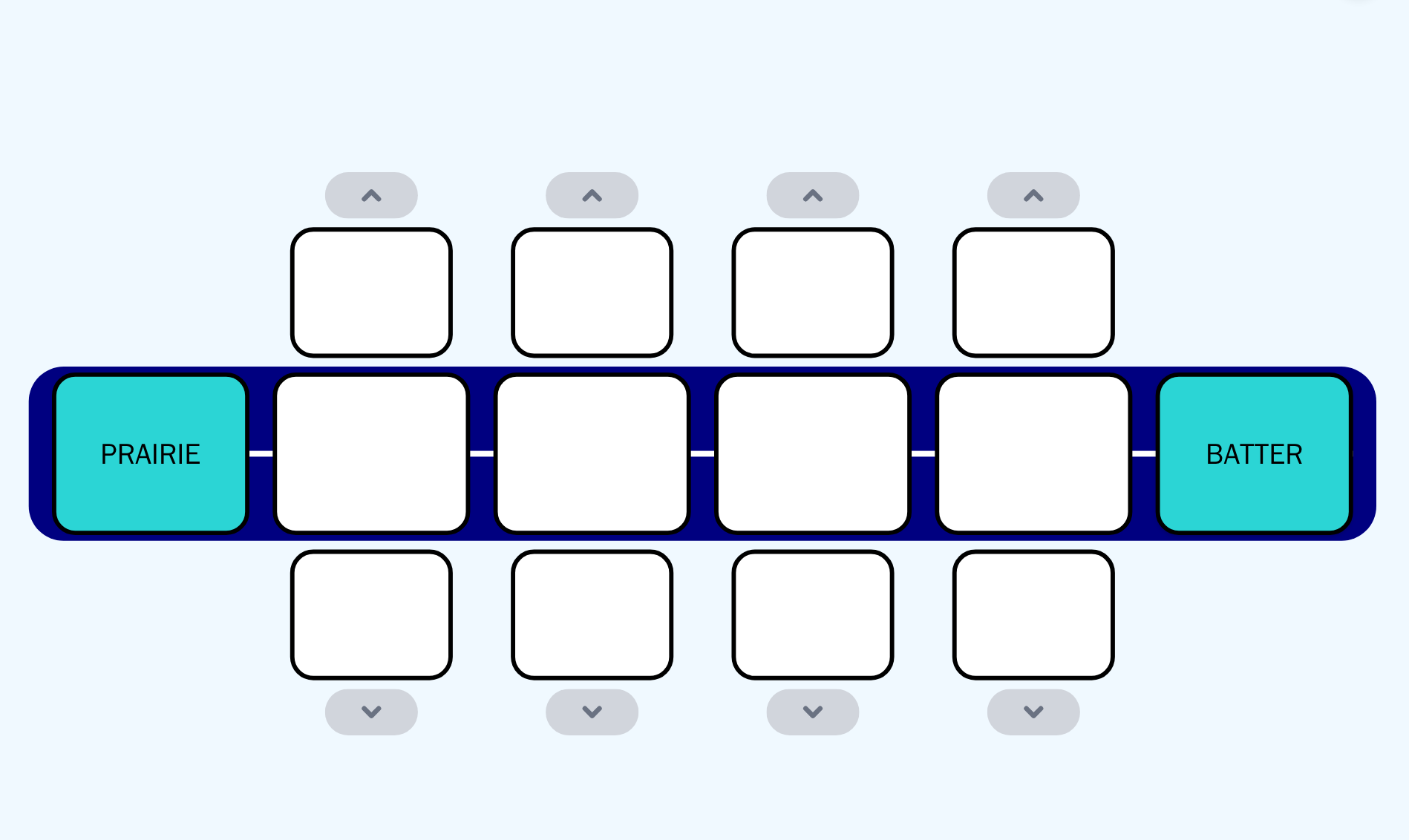
| In this addictive word-association game, find the steps that will unite two seemingly unrelated words in just four moves. |
 |
| PLAY NOW |
|
|
| |
|
|
|
| |
Click to sign up.
|
|
|
|
|
|


Comentarios
Publicar un comentario