| | | | By Made by History / Produced by Olivia B. Waxman | The Trump Administration has taken aim at museums and other historical sites, ordering the removal of signs and exhibits related to American slavery. Telling the truth about slavery in the United States was long understood as a threat to that system; in fact, in the 1830s Congress passed the infamous "gag rule" banning discussion of slavery on the House floor. As author Bob Crawford writes in Made by History, John Quincy Adams and others refused to accept this silencing. After serving as president, Adams returned to public office to serve in Congress. There, he relentlessly raised the issue of slavery, marshaling rules and procedures to undermine and eventually kill the gag rule. Newer versions of the same silencing impulse have emerged over the years—not to prevent unpleasant conflict, but to avoid a necessary moral reckoning with slavery and its aftermaths. But Adams's story reminds us of the importance of fighting for the truth. | |
|
| | | | | | | | | | | | | | | This week in 1967: The Beatles |  | The Sept. 22, 1967, cover of TIME |
| TIME |
| "All the successes of the past two years were a foreshadowing of Sgt. Pepper, which more than anything else dramatizes, note for note, word for word, the brilliance of the new Beatles. In three months, it has sold a staggering 2,500,000 copies—each a guaranteed package of psychic shivers. Loosely strung together on a scheme that plays the younger and older generations off against each other, it sizzles with musical montage, tricky electronics and sleight-of-hand lyrics that range between 1920s ricky-tick and 1960s raga. 'A Day in the Life,' for example, is by all odds the most disturbingly beautiful song the group has ever produced." |
|
| READ MORE » |
|
| | This week in 1977: Diane Keaton | 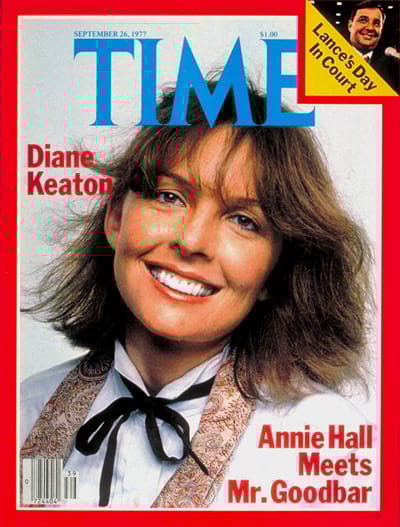 | The Sept. 26, 1977, cover of TIME |
| Douglas Kirkland |
| "Call Diane Keaton, the shy, gangly, lost-and-found soul who is Annie in Annie Hall, the funniest woman now working in films. Small praise. Give or take Lily Tomlin, it is hard to think of another woman now being funny in films. Remember Keaton in the Godfather movies? Not likely. She was invisible in The Godfather and pallid in The Godfather, Part II. She played Al Pacino's wife, and her role amounted to telling Pacino every now and then to stop killing people so often and spend some time with the kids. Says Keaton: 'Pacino was great. Robert De Niro was great. I was background music.' That expresses well enough an oddity of the past two decades of moviemaking. Women, with a few notable exceptions, have been background music." |
|
| READ MORE » |
|
| This week in 2003: the death of Johnny Cash | 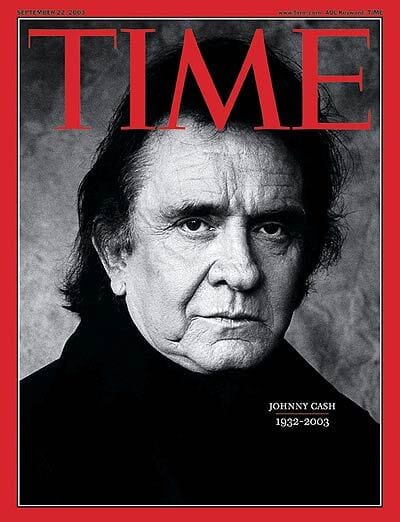 | The Dec. 10, 2001, cover of TIME |
| Ruven Afanador/Corbis Outline |
| "The stature Cash embodies is not so much out of fashion as above it. His CDs are found in the country section of the music store, but he doesn't quite fit there. He came up with rockabilly phenoms like Elvis Presley, Carl Perkins and Jerry Lee Lewis, but few of his songs were hard-driving rave-ups. 'I Walk the Line,' 'Ring of Fire,' 'Folsom Prison Blues'–these are, if anything, contemporary folk songs. Cash sang of specific injustices and eternal truths; he was the deadpan poet of cotton fields, truck stops and prisons. He was a balladeer, really, a spellbinding storyteller–a witness, in the Christian sense of the word. Here was a man who knew the Commandments because he had broken so many of them." |
|
| READ MORE » |
|
| | |
|


Comentarios
Publicar un comentario